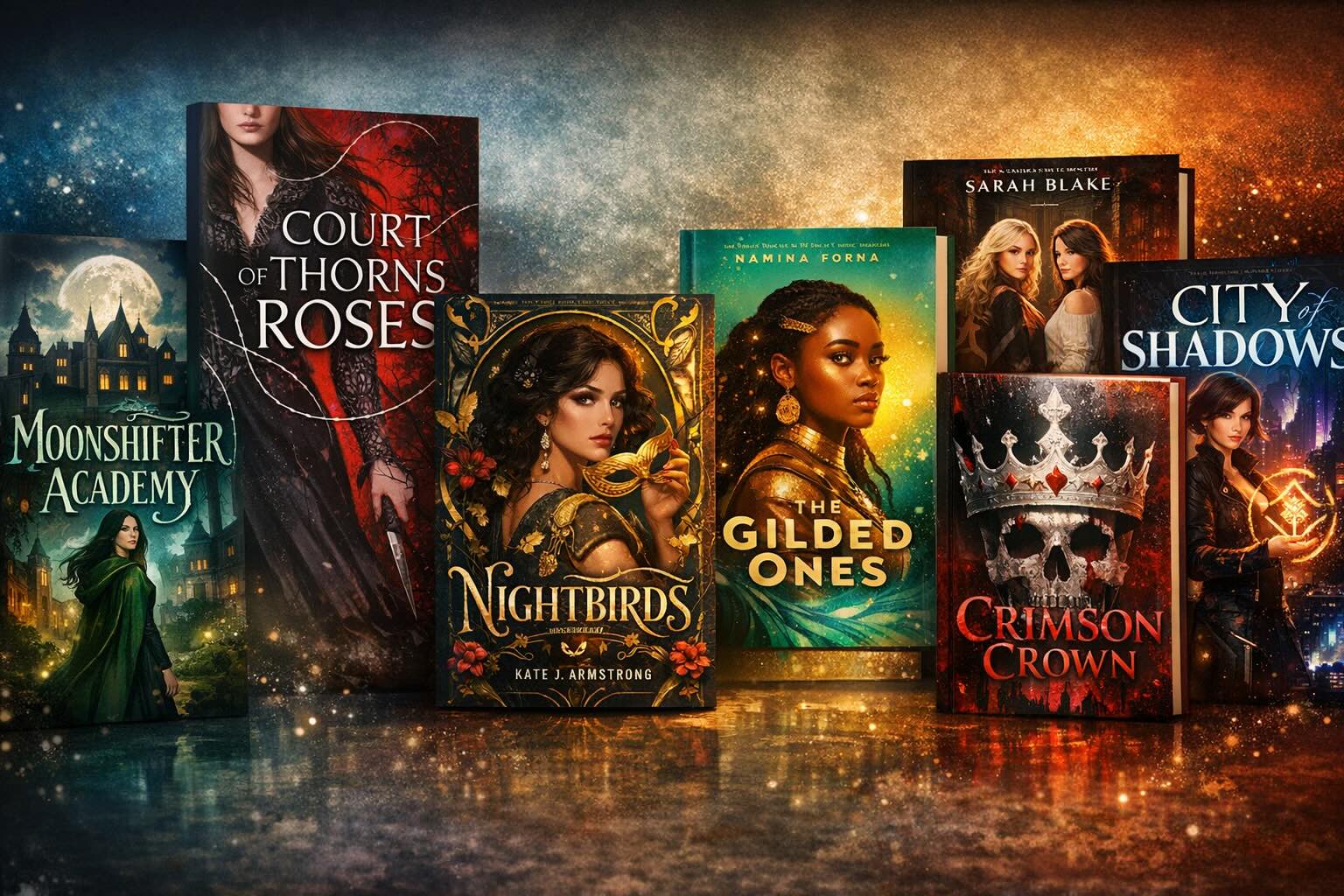
You know that feeling when you walk past a bookstore window and immediately recognize a YA fantasy novel without even reading the title? That's the power of cover design. And lately, I've been thinking a lot about how dramatically different YA fantasy covers look today compared to just ten or fifteen years ago.
I'll be honest: I need to up my cover game. Looking at my own books next to some of the newer releases, I can see the shift happening in real time. So I decided to dig into how we got here, what's working right now, and where the genre might be heading next.
The Early 2010s: Girls in Gowns and Moody Atmospheres
Remember when every YA fantasy cover design featured a girl in a flowing dress, usually with her back to the camera, standing in a misty forest or dramatic landscape? The early 2010s were dominated by this aesthetic. Think Twilight's influence rippling through the entire genre. Covers were atmospheric, romantic, and leaned heavily into that mysterious, ethereal vibe.
The color palettes tended toward deep purples, blues, and blacks. Typography was often elegant and swirly, with serif fonts that screamed "this is a magical world." These covers worked beautifully in physical bookstores where you could appreciate the moody details up close.
What made these covers effective was their ability to promise escapism. They transported you before you even opened the book. But there was also a sameness to them. After a while, it became hard to tell one fantasy novel from another on the shelf.
The Mid-2010s Shift: Bigger, Bolder, Digital-First
Then something changed around 2015. And it wasn't just aesthetic, it was practical. When Borders went out of business and online shopping became the primary way people discovered books, cover design had to adapt. Suddenly, your cover needed to work as a tiny thumbnail on Amazon or in someone's Instagram feed.
Enter the era of massive sans-serif typography. Covers got simpler, bolder, more graphic. Instead of intricate illustrated scenes, you'd see a single striking image: a dagger, a crown, a symbolic object against a solid color background. The fonts grew enormous. Sometimes the title was the entire cover.
This shift made perfect sense. When your cover is the size of a postage stamp on someone's phone screen, delicate details disappear. But a bold red title against black? That pops. That gets noticed.
Current Trends: Illustrated Portraits and Character-First Design
Fast forward to now, and we're seeing something really interesting happen. YA fantasy cover design has circled back to illustration, but in a completely different way than before. Instead of faceless figures in the distance, we're getting intimate character portraits. Close-ups of faces. Direct eye contact. Emotional expressions that tell you something about the character's journey.
Books like Nightbirds by Kate J. Armstrong and The Gilded Ones by Namina Forna exemplify this trend. Rich, painterly illustrations with the protagonist front and center. The typography is still bold (because that thumbnail issue never went away), but it's paired with artwork that feels personal and inviting.
The color palettes have gotten more adventurous too. We're seeing electric blues, neon pinks, saturated purples, and vibrant golds. Sometimes there's a single dominant color, sometimes there are sharp contrasts that make the cover practically vibrate off the screen. The goal is to stand out in an incredibly crowded market.
What's Working Right Now in Cover Design
After researching current trends, here's what's clearly resonating with readers:
Illustrated covers are back in a big way. Hand-drawn, painterly art that feels unique and crafted specifically for that book. This is a move away from stock photography and toward custom artwork that captures the story's essence.
Character portraits that feel cinematic. Readers want to see the protagonist. Not from behind, not in shadow, but face-to-face. There's an intimacy to these covers that creates an instant connection.
Typography as art. The title isn't just text anymore, it's a design element. Fonts are textured, embellished, integrated into the artwork. Gold lettering, sparkle effects, ornate serifs that feel almost tactile.
Symbolism over literal scenes. Instead of trying to depict a specific moment from the book, covers are using symbolic imagery. A bird, a flower, a magical object that represents something deeper about the story.
Readability at thumbnail size. This remains non-negotiable. No matter how gorgeous the art is, if the title and author name disappear when the cover shrinks down, it's not doing its job.
The Subgenre Variations
Not all YA fantasy covers follow the same rules. The subgenre matters:
Romantasy (fantasy with heavy romance elements) leans into lush, romantic imagery. Think A Court of Thorns and Roses with its dramatic character portraits, flowing fabrics, and rich jewel tones. These covers promise both adventure and swoon-worthy relationships.
Urban fantasy needs to balance the magical and the mundane. Covers often feature neon lighting, city skylines, and sharp color contrasts. The typography tends to be edgier, more contemporary.
Dark fantasy goes for atmospheric, moody designs. Darker color palettes, shadowy figures, and ominous imagery that signals the stakes are high and the content might be intense.
Academy/school settings often incorporate architectural elements, magical symbols, or organized, structured designs that hint at the institutional setting.
Why I Need to Level Up
Looking at my own covers for Moonshifter Academy and The Atlantis Twins, I can see where they fit into this evolution. But I also see where I could push further. The market has become so visually sophisticated. Readers expect more than just "competent" cover design. They want covers that stop their scroll, that demand attention, that become part of the book's identity in a way that extends beyond the page.
The covers that work best right now aren't trying to blend in with genre expectations. They're taking risks. They're bold. They're making artistic choices that might alienate some readers but will deeply appeal to their target audience.
I've been playing it safe. And safe doesn't cut it anymore.
What's Next?
I'm seeing hints of where cover design might be heading: More diversity in art styles. Not every cover needs to look hyper-polished. Some of the most striking recent covers have a sketch-like quality or incorporate mixed media elements.
Retro-futurism and unexpected aesthetics. Some designers are pulling from pop art, art deco, or other unexpected influences to make fantasy covers feel fresh.
Interactive or multi-layered designs. Some special editions are experimenting with elements that only become visible under certain lighting, or covers that reveal hidden details when you look closely.
Less is more. While maximalism is popular, there's also a counter-trend toward extremely minimal, elegant designs that trust the reader to be intrigued by simplicity.
The Practical Reality
Here's the thing about cover design: it's expensive to do it right. Custom illustration from a talented artist isn't cheap. And as an indie author, you're weighing that investment against everything else you need to do to get your book out there. A few of my covers I've done on my own since I know Photoshop and all. Can you tell which ones? I hope not (unless they're the ones you love the most lol).
But covers are also your first (and sometimes only) chance to make an impression. Before anyone reads your blurb, before they sample your first chapter, they see your cover. And in about two seconds, they decide whether this book is for them.
So I'm committed to upping my game. That means working with better designers, investing in custom artwork, and being willing to take bigger creative risks. It means studying what's working in the market right now and figuring out how to apply those lessons while still making something that feels authentically mine.
What This Means for Writers
If you're writing YA fantasy, or really any genre with strong visual conventions, here's my advice:
Study the market constantly. Don't just look at covers from five years ago. See what's being released right now, what's getting attention on BookTok, what covers make you stop and stare.
Invest in professional design. I know it's tempting to DIY or go with the cheapest option, but your cover is not the place to cut corners. This is your book's packaging, its first impression, its visual identity.
Think about your subgenre. A romantic fantasy needs a different approach than a dark, gritty urban fantasy. Your cover should signal to readers exactly what kind of story they're getting.
Test at thumbnail size. Before you commit to a cover, shrink it down to the size it'll appear on Amazon. Can you still read the title? Does it still have visual impact? If not, revise.
Be willing to evolve. Just because your first three books had a certain style doesn't mean you're locked into that forever. If the market has shifted and your covers feel dated, it might be time for a refresh.
Final Thoughts
Cover design in YA fantasy has gone through several distinct eras, each responding to changes in how readers discover and buy books. We've moved from atmospheric, illustrative covers designed for bookstore shelves, to bold, graphic designs optimized for online thumbnails, to the current era of character-forward illustrated art that balances intimacy with visual impact.
The lesson I'm taking from all of this? You can't afford to be complacent. The market is always moving, reader expectations are always rising, and your covers need to keep pace. They need to work hard for you, catching eyes in Instagram feeds and Amazon search results, while also creating an emotional connection that makes someone think, "I need to read this."
I'm excited to see where the next wave of YA fantasy cover design takes us. And I'm even more excited to make sure my books are part of that conversation rather than relics of an earlier era.
Now if you'll excuse me, I have some calls to make to cover designers. Time to level up.
What do you think of current YA fantasy cover trends? Do you miss the atmospheric covers of the early 2010s, or are you loving the bold, character-forward designs of today? Let me know in the comments!