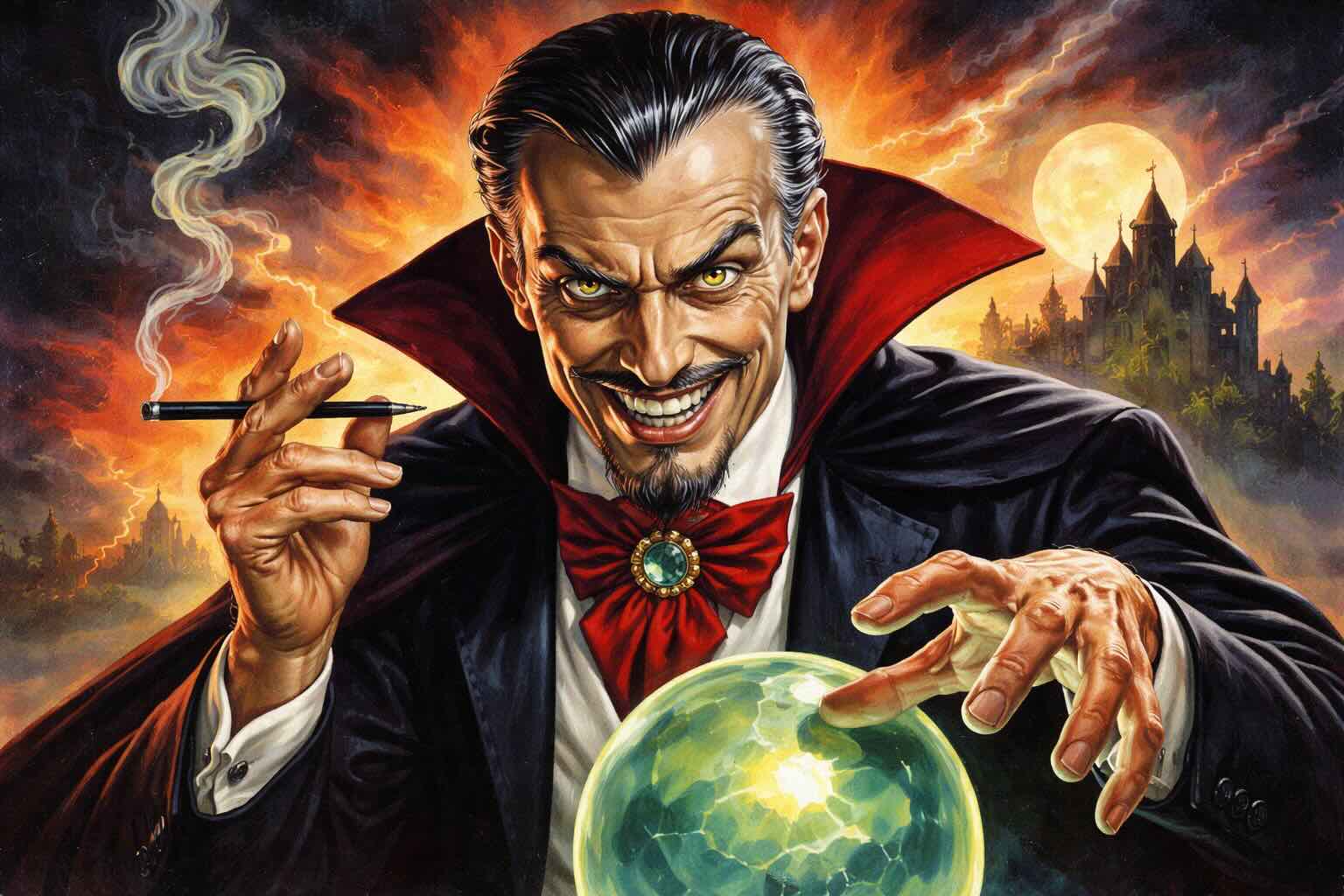
When Urban Fantasy Villains Steal the Show
Why Antagonists Matter
Let’s be honest. You have a favorite villain.
You might not call them your favorite. You might say “complicated” or “tragic” or “weirdly charismatic.” But somewhere along the way, you found yourself more intrigued by the antagonist than the hero. And you did not hate it.
You are not alone.
Villains have been quietly stealing the spotlight for centuries, and readers keep showing up for it. Urban fantasy in particular seems tailor-made for unforgettable antagonists. Dark magic, secret histories, ancient power structures, and morally messy choices all create the perfect environment for villains who feel a little too real.
So what is going on here?
Villains Say the Things We’re Thinking
Heroes are usually busy doing the right thing. Villains, meanwhile, are doing the interesting thing.
They ask the uncomfortable questions. They poke holes in the rules of the world. They look at magical systems, ancient laws, or supernatural hierarchies and say, “What if this is broken?” Then they test that theory with alarming enthusiasm.
In the Moonshifter Academy series, the antagonists are rarely evil for sport. Blood mages, ancient vampires, and power-hungry leaders all believe they are fixing something that never should have existed in the first place. Their logic is unsettling because it is not nonsense. It is coherent. Sometimes it is even persuasive.
That quiet moment when you think, “Well… they’re not entirely wrong,” is where villains earn their fan clubs.
If you are curious, the series begins with Last Wolf
You can find it here: https://www.amazon.com/dp/B0B5KZ5J1F
We Remember Villains Because They Are Honest About Desire
Heroes often discover what they want over time. Villains already know.
They want control.
Freedom.
Revenge.
Order.
Immortality.
Recognition.
Love that never ends.
Power that cannot be taken away.
And they do not apologize for wanting it.
That clarity is magnetic.
In Lost Wolf, several antagonistic forces are driven by a single, relentless belief: power should belong to those strong enough to wield it. Watching that belief collide with Kat’s more uncertain, human approach to leadership is where much of the tension lives.
You can check out Lost Wolf here: https://www.amazon.com/dp/B0B9H1XQ6R
Villains Let Us Safely Explore Our Darker Curiosities
Readers are curious creatures. We want to peer over the edge without jumping.
Villains let us do that.
They explore obsession, ambition, rage, grief, and forbidden power without asking us to live with the consequences. We get to sit back and wonder, “What would I do with that kind of power?” while the villain answers first, loudly, and usually disastrously.
In Shadow Wolf, the looming threats are not just enemies to defeat. They represent paths Kat herself could take if fear or certainty hardens her too much. No spoilers, but that tension makes every confrontation feel personal, not just epic.
Shadow Wolf is here: https://www.amazon.com/dp/B0C2FQ9Z8M
Sometimes the Villain Is the Most Human One in the Room
Here is the quiet secret readers pick up on Villains often feel more emotionally complete than heroes.
They have already crossed lines. They have already made terrible choices. They are living with the consequences, even if they pretend not to care. That weight gives them gravity.
Heroes are still becoming.
Villains already are.
That does not make villains right. It makes them compelling.
Why We Root for Them Even When We Shouldn’t
We root for villains because they are brave enough to want something absolutely.
We root for them because they challenge stagnant systems.
Because they refuse to be small.
Because they act where others hesitate.
And sometimes, if we are being really honest, we root for them because we recognize pieces of ourselves we do not usually admit are there.
Well, at least I do. Can you relate?
The Real Reason Villains Matter
Villains matter because they make the story feel real.
They remind us that every world, magical or otherwise, is shaped by competing visions of how life should be lived. They force heroes to choose not just what they will fight, but who they will become.
So the next time you catch yourself waiting eagerly for the antagonist to show up, do not feel guilty.
Heroes may win the ending.
But villains are the reason we keep turning pages.