I love a good trilogy. But I also have a nightstand stacked like a Jenga game and a November calendar mostly full of pie logistics. Heading into the holidays, I don't have room for a three-book commitment. I want a whole world, a whole rebellion and a whole ending, all between two covers.
That's the beauty of standalone dystopian books. No cliffhanger. No waiting a year for book two. No discovering that the series you just fell for has been "on hiatus" since 2014. 🙂 So here are seven I'd hand a friend, a mix of YA and crossover reads. One of them is mine. I'll flag it when we get there.
Why standalone dystopian books hit harder
A dystopian series has room to stretch. Book one sets up the rules, book two cracks them, book three burns the whole thing down. A standalone has to do all of that in one go, and the squeeze tends to make it sharper. Every scene has a job.
When I'm hunting for dystopian books to read, I look for three things:
- Rules that make a twisted kind of sense. The scariest dystopias aren't run by cartoon villains. They're run by people who honestly believe they're helping.
- A character who notices the crack. One question, one forbidden book, one taste of something they shouldn't have. That's where the story starts.
- A real cost for noticing. If questioning the system is free, it isn't much of a system.
Every pick below has all three. And because they're standalones, they're also easy to gift, easy to suggest for a book club and easy to finish before the leftovers run out.
The classic: Fahrenheit 451 by Ray Bradbury
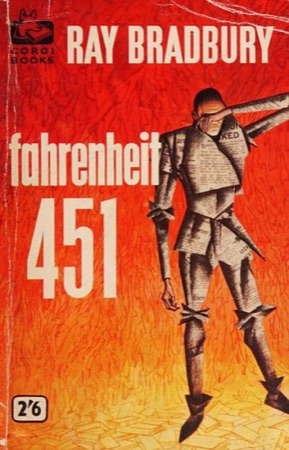
Guy Montag is a fireman. In his world, that means he starts fires: his job is to burn books. Then a conversation with his strange, curious teenage neighbor, Clarisse, gets him asking questions he can't un-ask.
What still gets me, seventy-odd years later, is that nobody had to force most of these people. They traded books for wall-sized screens and constant noise, and they were happy to. It's short enough to read in a weekend and unsettling enough to think about for a month. If you skipped it in school, give it another shot as a grown-up.
The YA one that predicted your phone: Feed by M.T. Anderson
Published in 2002, Feed imagines teens with the internet wired straight into their brains, ads and all, streaming every second of the day. Titus meets Violet on a spring break trip to the moon (yes, the moon), and she's the first person he's met who actually pushes back against the feed.
It's a dystopian romance with teeth. The slang-heavy narration takes a chapter or two to settle into, then it becomes the point: you're hearing what a mind sounds like after years of being sold to. Bring tissues. Also, maybe put your phone in another room.
The one that will make you check the tap: Dry by Neal and Jarrod Shusterman
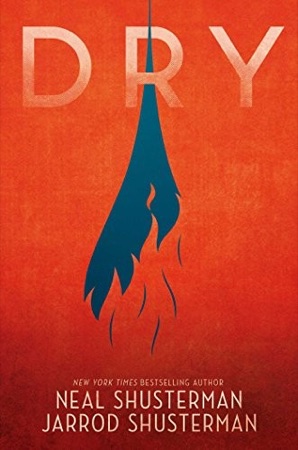
Southern California is in a long drought. Then one day the taps simply stop. Alyssa, her little brother Garrett and their prepper neighbor Kelton have to find water as their suburb slides from inconvenience to chaos in a matter of days.
This is barely a dystopia, which is what makes it so creepy. Nothing has to change except one thing we all take for granted. The multiple viewpoints and short chapters make it a fast, white-knuckle read. Perfect if you like your YA dystopian books with a thriller pace.
The one about who belongs: Internment by Samira Ahmed
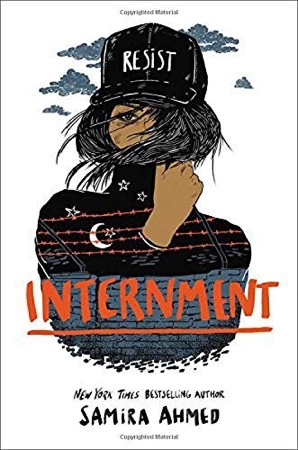
In a near-future United States, Muslim Americans are rounded up and sent to internment camps. Seventeen-year-old Layla Amin and her parents are among them. Inside the camp, Layla starts organizing, and she refuses to be quiet about it.
The book deliberately echoes the incarceration of Japanese Americans during World War II, which is the part that lands hardest: this isn't a far-fetched world. It's an urgent, angry, hopeful read about speaking up when it's dangerous to do so. There's a love story in the background, but the heart of it is Layla's voice.
The one with a word limit: Vox by Christina Dalcher
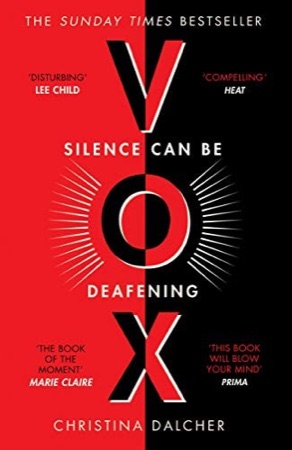
In Vox, women are allowed one hundred words a day, counted by a bracelet on their wrist. Go over, and it shocks you. Dr. Jean McClellan was a linguist before the new rules took her job and her voice. Then the government needs her expertise, and she sees a chance to bargain.
This one is an adult thriller, so it's better for older teens and up. The premise is so simple it sticks with you. Try counting your own words for an hour. It's harder than it sounds.
The hopeful one: Station Eleven by Emily St. John Mandel
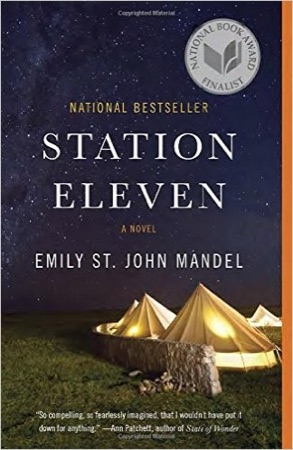
Twenty years after a pandemic collapses civilization, a small troupe called the Traveling Symphony moves between settlements around the Great Lakes, performing Shakespeare and classical music. The story weaves back and forth in time, connecting a handful of people to one famous actor who died on the night it all began.
Strictly speaking, it's more post-apocalyptic than dystopian. I'm including it anyway because it's the antidote to everything else on this list. It's quiet and beautiful, and it argues that art isn't a luxury. It's how people stay people. If you've only seen the TV adaptation, the book is worth your time.
The one where flavor is against the law: Recipe X by M.S. Kaminsky
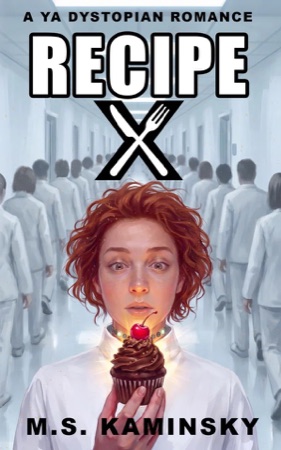
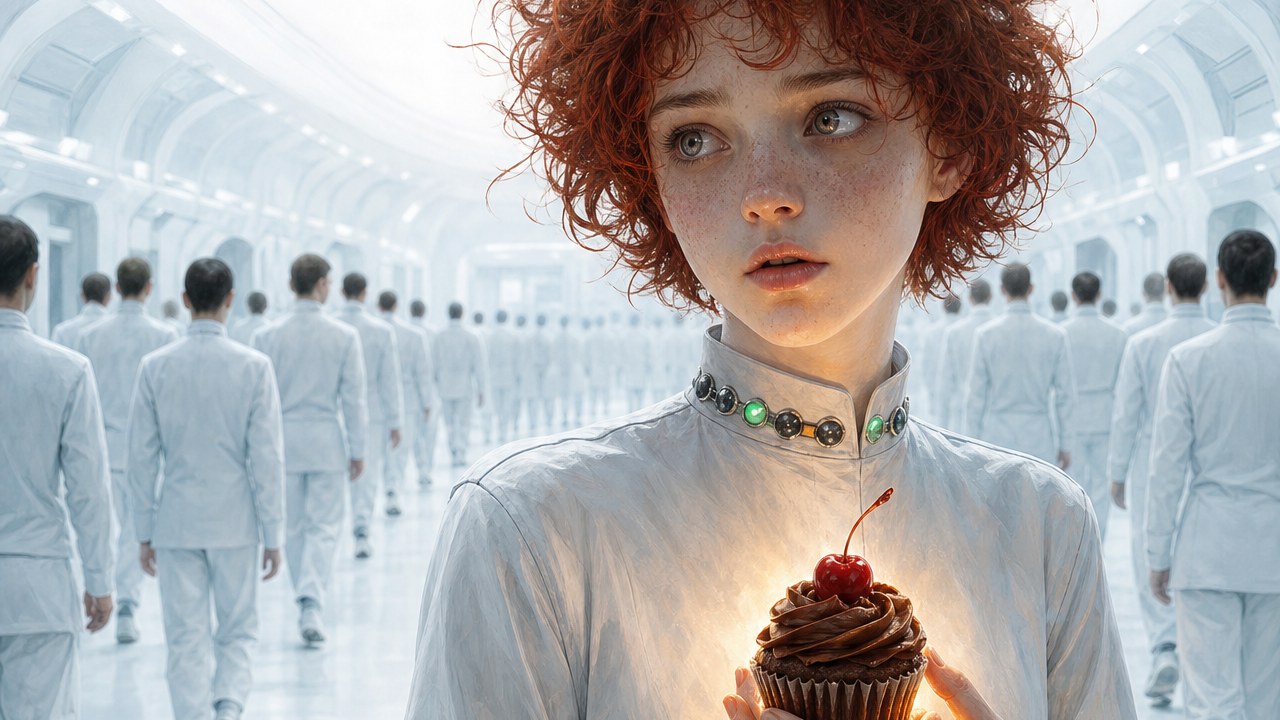
Okay, this is the one that's mine. 🙂 Persi lives in The Hive, a spotless white city where nutrition comes by infusion, not by mouth. The glowing points on the garland at her neck track how good a citizen she is. Food isn't just unnecessary. It's dangerous. Then she tastes a forbidden chocolate cupcake, and something wakes up that the Hive can't infuse away. Enter a renegade chef from the wasteland who is more than happy to feed it.
I started with one question: what would a world look like that controls what you put in your body, all for your own good? Recipe X is the answer, a standalone YA dystopian romance with high stakes, a swoony cook and a lot of very descriptive food. If that sounds like your kind of rebellion, you can find Recipe X at your favorite store. Fair warning: don't read it hungry. Or do, and keep the pie close. I also wrote a little more about the book's world in this post about Recipe X.
Which standalone dystopian book should you read first?
If you can't decide, go by mood:
- You want a dystopian romance: Feed or Recipe X.
- You want to stay up way too late: Dry or Vox.
- You want something that leaves you hopeful: Station Eleven.
- You want the classic everyone references: Fahrenheit 451.
- You want a hero who refuses to be silenced: Internment.
And if you'd rather settle in for a longer haul after all, I rounded up some favorite series in the best YA dystopian fiction, plus a list for anyone still chasing that first Katniss feeling: if you like The Hunger Games, you'll like these.
More dystopian reading from the blog
- The allure of YA dystopian romance, on why forbidden love and broken worlds go together so well.
- Books about clones, seven sci-fi reads on who gets to be real.
- Literary snack time, the most mouth-watering foods in YA novels. Very on-theme for Thanksgiving week.
Now I want to hear from you. What's your favorite standalone dystopia, the one you'd press into a friend's hands? Tell me in the comments. And if you'd like a free read for the long weekend, grab a free book from me here. Happy reading, and happy (early) Thanksgiving!